
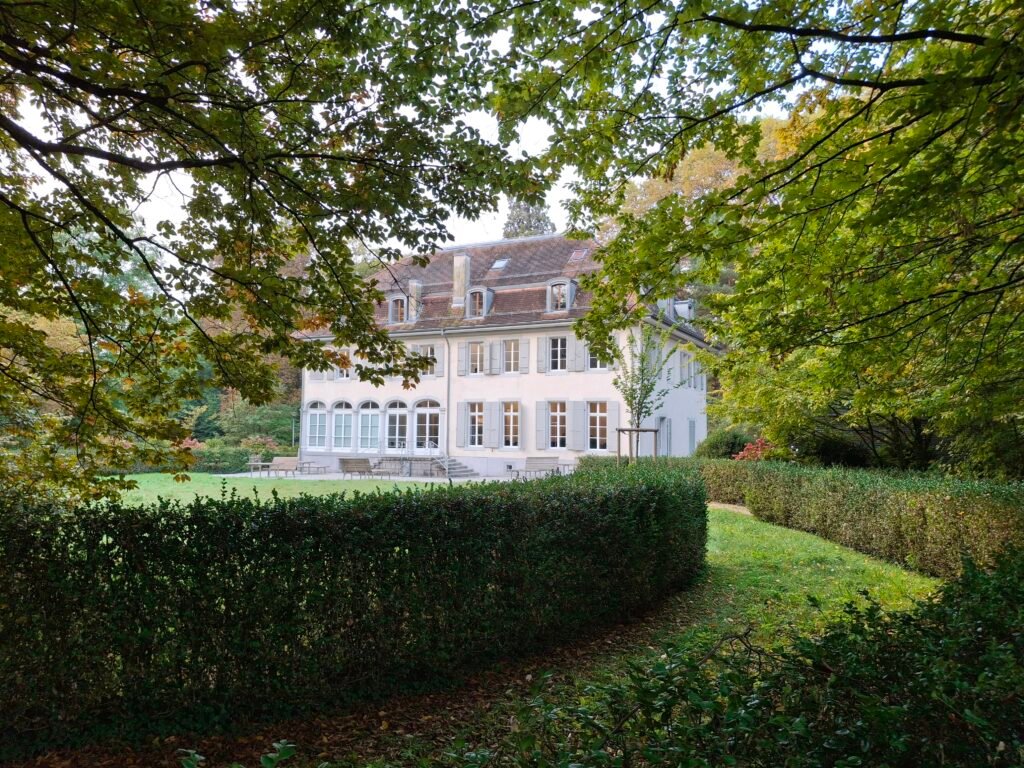
Bathed by a wet morning sunlight, the Chateau de Dorigny beckoned. Once visited by the luminaires of the 18th century, it now welcomed a group of scholars dedicated to understanding one of the country’s most remarkable thinkers ― Jean-Jacques Rousseau. For me it was the culmination of a long process; an opportunity to reflect on 10 years of a research that has changed the way I, and many others, think about 18th-century music and theatre.
It all started in 2015. Maria Gullstam, then a PhD applicant at Stockholm University, was working on Rousseau and the theatre. Together with her colleagues at ‘Performing Premodernity’, the idea came up for a performance of Rousseau’s seminal Pygmalion. Jed Wentz, an adviser to the project, suggested that I be brought in to work on the part of Pygmalion, and there I was, late Spring in Stockholm, cracking my head with Rousseau’s scène lyrique together with Maria and Magnus Tessing-Schneider. I would perform Pygmalion numerous times in the following years, each time solving old problems and finding new ones.
Click the image to see an excerpt of Pygmalion at Česky Krumlov, 2015:
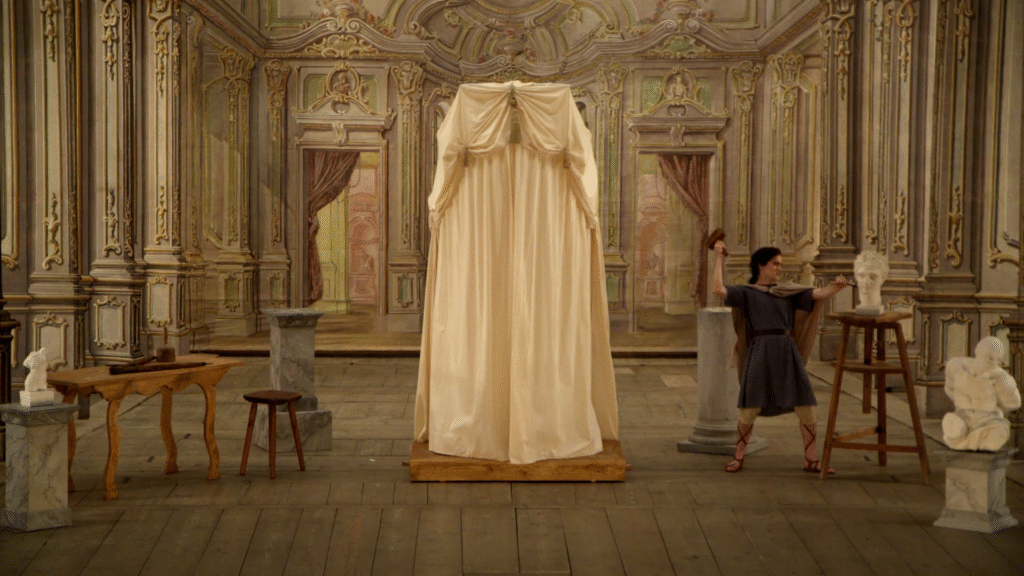
I knew little about melodrama at the time, but by the first performance at Česky Krumlov, I had come to realize, with a mix of excitement and despair, that my movements had to coincide with those of the music. Rousseau had made it abundantly clear. In his Dictionary of Music he demands from an actor or singer that he be ‘an ingenious mimic’, and that
‘his steps, his eyes, his gesture, all should incessantly agree with the music, and even without his appearing to notice it’.
This was more than simply matching the overall quality of my physicality to the expression of the music: I had to step to the beat, gesture along with the pitch, stiffen, soften, expand according to the harmonies; and all without falling into dance. In short, I had to regard the musical score as a list of cues to my choreography.
The practical consequences of this realization were momentous. Together with conductor and keyboardist Mark Tatlow, a new relationship between stage and orchestra pit was going to be forged…
(to be continued!)